Although a seven-figure annual salary has now become a label often used jokingly in countless public-account headlines, it must be acknowledged that achieving one is not easy. Behind every such story lies long-term accumulation, professional focus, and a broader environment shaped by the market economy and technological innovation. After receiving material rewards commensurate with intellectual work, people may also gradually begin to reflect on the meaning of life and career development.
Two years ago, Wang Yang, a PhD in Vehicle Engineering from Jilin University, left a stable position at a Project 985 university and moved from Changchun to Hangzhou with his dreams and his family. He became Director of Chassis Intelligent Control at the brand research institute of a Fortune Global 500 automotive company and a chassis electronic-control specialist at its central research institute. He received his first seven-figure annual-salary position and an option grant for 200,000 shares at HKD 19 per share. Two years of experience at a large company gave him a deeper understanding of complete-vehicle R&D processes and systems, as well as chassis electronic-control product development, and also gave rise to his original aspiration to start a business.
Before coming to Hangzhou, Dr. Wang worked full time in a university research and teaching position while also working at a postdoctoral workstation in mechanical engineering at Beijing Institute of Technology. During that time, he was awarded a general project in the 72nd batch of the China Postdoctoral Science Foundation. He also served as Director of Advanced Technology at a leading domestic supplier of electronically controlled suspension, where he was responsible for electronically controlled suspension software development, dedicated suspension-test-equipment R&D, CAE simulation technology for air suspension, and Active Stabilizer Bar product development. His outstanding theoretical research and product-development work led to his appointment by the Suspension Technology Branch of the China Society of Automotive Engineers as a professional member of its technical committee. Dr. Wang is a high-level, multidisciplinary innovator with both depth in scientific research theory and product R&D experience.
During his work at an OEM in Hangzhou, the process-driven development pace and stable life were not what he truly wanted. A voice within him kept calling for him to leave his comfort zone, translate his past Full Active Suspension System research achievements into real-world outcomes, and genuinely advance industrial development. Intelligent chassis is the final piece of high-level automotive intelligence, and Full Active Suspension Systems are the final piece of chassis intelligence. The thought of taking initiative and acting proactively remained in his mind. In the end, Wang Yang made an unconventional decision: he gave up a seven-figure annual-salary position, Hong Kong-listed company equity, and a RMB 1 million high-level-talent subsidy from Hangzhou that he had not yet received. He resigned to go all in on entrepreneurship, pursue what he loves, give it everything he has, and live without regret.
Why start a business? Selected Works of Mao Zedong offers part of the answer.
(1) Devote one’s life to doing one thing well. This does not mean choosing one job to do for life; it means choosing an industry that truly interests you, studying it deeply, and pursuing excellence with unwavering focus. This spirit is what “Zhiwei” means. Of course, there are no inherently correct choices in this world. We simply have to work hard to make our original choices a little more correct. We can, and must, look down on any enormous difficulty encountered in life and place it in the category of “nothing to worry about.” That is our optimism. What limits a person’s growth is never the outside world, but their own fear.
(2) The compound effect: life is like rolling a snowball; what matters is finding very wet snow and a very long slope. Entrepreneurship is one such act of rolling a snowball.
(3) Take responsibility. Have the courage to assume commercial risk in your own name, and society will reward you according to responsibility, equity, and leverage. Fortunately, modern society has no debtors’ prisons. A person will not be imprisoned or executed for losing other people’s money. Yet, as social beings, experiencing personal failure in public is difficult to accept. In fact, those capable of taking the risk of failure in public under their own name gain a powerful source of motivation.
(4) Remain patient, apply expertise, and combine it with leverage. In the end, your talent and effort will receive corresponding returns. Success takes time; even when everything is ready, the time required remains uncertain. Work tirelessly and gladly at what you love, keep improving, and accumulate progress day by day. Do not calculate the time and effort you invest. The true record of a life is, in fact, the sum of the pain it has endured. If, at the end of life, you must face your true self and review what meaningful things you have done, what you remember will certainly be the sacrifices you made and the challenges you accepted. In any case, it is the process of confronting difficulties that gives life meaning. A person who is truly strong inside must have weathered storms, experienced peaks and lows, and seen the many facets of life. Those without ability only shout loudly. Do not be intimidated by an opponent’s aggressive momentum, discouraged by difficulties that can still be endured, or disheartened by setbacks. Necessary patience and persistence are essential.
(5) Do not fear failure. I would rather become an entrepreneur who has failed than someone who has never tried entrepreneurship, because even a failed entrepreneur possesses the ability to build independently. To succeed, a person must undergo countless tests, and someone who cannot withstand them will never accomplish a great undertaking. There are no dead ends in this world, only people who have despaired of the road ahead. Those who express despair in dangerous circumstances and cannot see light in darkness are merely cowards and opportunists.
(6) Entrepreneurship is difficult. Yet in The Warlords, Pang Qingyun says that battles with a hope of victory will never be assigned to us; the battles assigned to us are certainly those with no hope of victory, and only by winning those battles can we have an opportunity. It is only an opportunity. You may say it is hard, but if it were not hard, it would never come to you. Only by actively seeking solutions can there be solutions. Only by believing that no problem is unsolvable can one gain the ability to solve every problem.
(7) Dare to leave the comfort zone. The Shawshank Redemption contains an idea: any place you dislike but cannot leave, and any life you dislike but cannot escape, is a prison. If you feel pain and unfreedom, I hope there will always be an unextinguished flame in your heart. Do not become numb, do not be assimilated, and strive to become a person with the strength to commit fully. Do not feel inferior, and do not fear temporary weakness or being behind. Weakness and being behind are not obstacles to survival; inferiority, self-doubt, and timidity resulting from them are what cause people to become constrained. Giving up and resigning oneself to fate is a downhill road without end. At any moment you may not notice, including now, the opportunity to change your fate through action is always present.
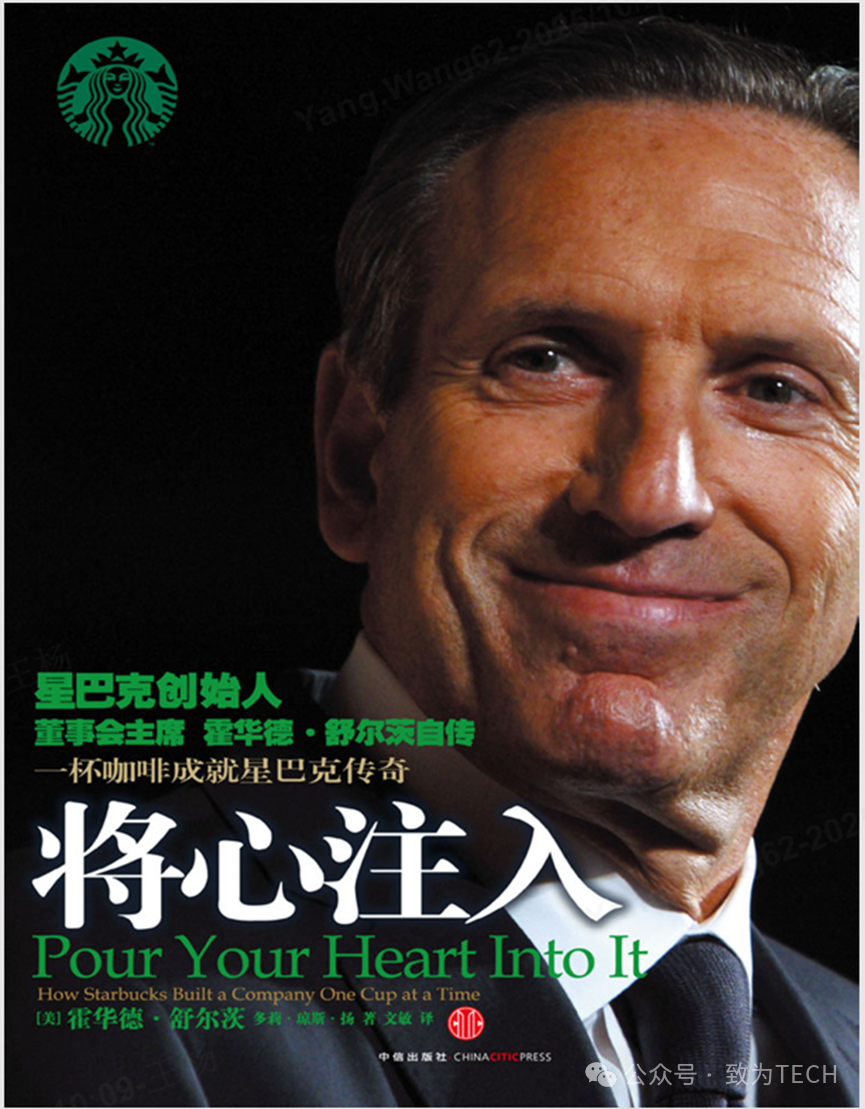
Finally, I would like to quote Howard Schultz, the founder of Starbucks, from his autobiography Pour Your Heart Into It: “I am an ordinary person, with no family background or social connections to rely on. But I dared to dream the biggest dreams and turn them into reality. I believe that most people can achieve their own dreams and surpass them, as long as they make up their minds and keep trying.”